
From Bean to Bar, From Farm to Cup

If you ask us where great flavor begins, we’ll point you to a hillside at first light. The air is thin and peppered with birdsong, the soil dark with last night’s rain. This is where our work truly starts—long before a bar snaps cleanly or a latte wears a fine rosetta. We travel to origin not out of romance but out of respect: the best coffee and the best cacao come from people who understand their land, and our job is to honor that knowledge all the way to your cup and your bar.
Picking What Matters
Our sourcing is built on direct relationships. We agree on quality, price, and timelines face-to-face, and we pay premiums tied to ripeness, sorting, and processing. That clarity lets farmers invest in the unglamorous, essential things—shade trees, drying beds, better fermentation boxes, school fees—so that good harvests become normal, not lucky.
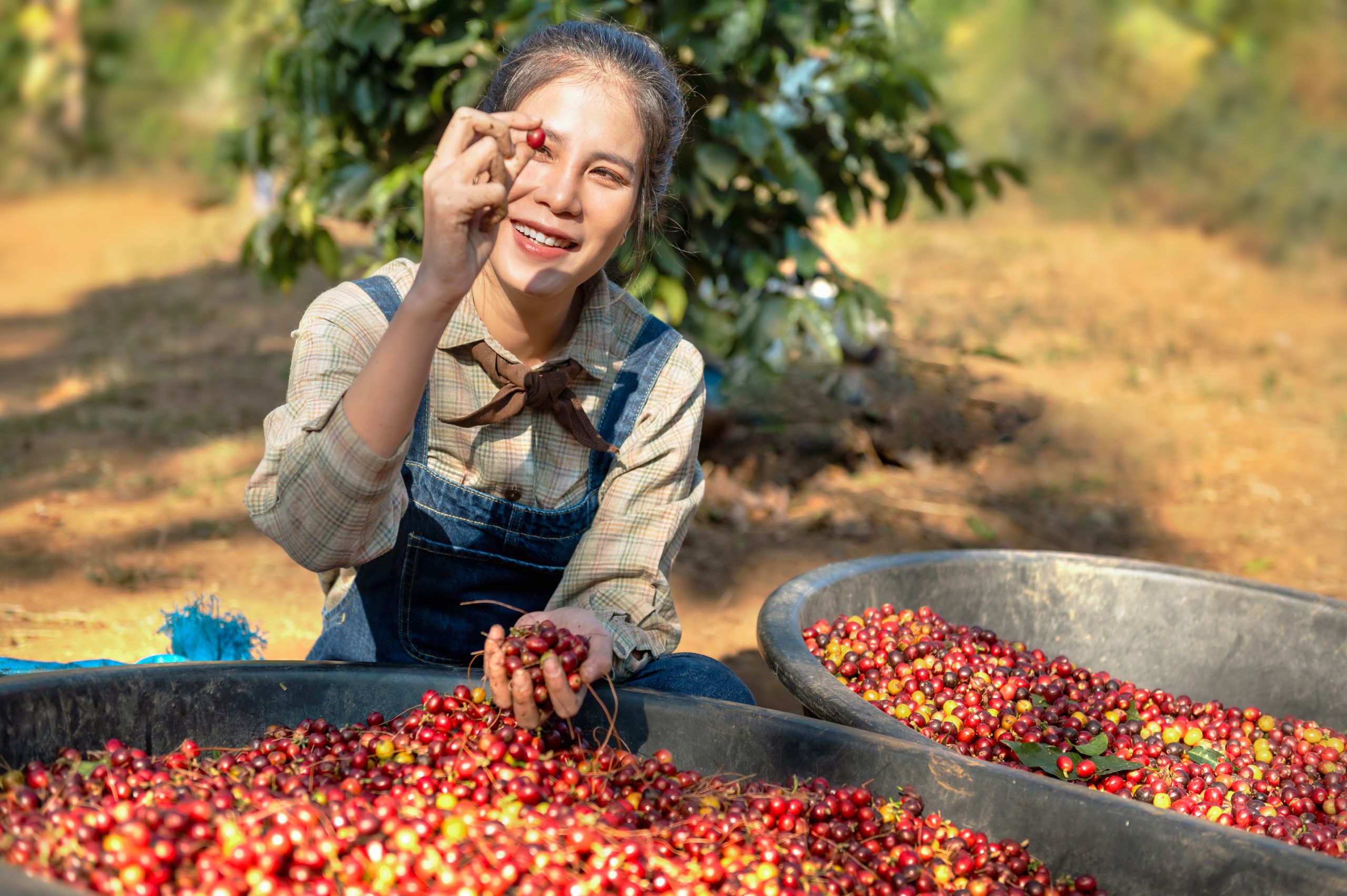
On our coffee side, we look for high-elevation plots where nights are cool and days rise slowly: conditions that lengthen cherry development and pack sugars into the seed. Varieties change by place—Bourbon and Typica for structure and sweetness, Caturra for citrus lift—but selective picking is non-negotiable. Only deep-red cherries go in the basket. Under-ripes stay on the branch to sweeten another day.
Cacao asks for similar patience. The best flavor hangs inside heavy pods that have fully turned—orange, crimson, or yellow depending on the cultivar. Pods are clipped rather than pulled to protect the tree. Inside, the pulp is bright and delicate; how it ferments decides whether a chocolate will sing with raspberry and black tea or sink into flatness.
Fermentation & Drying
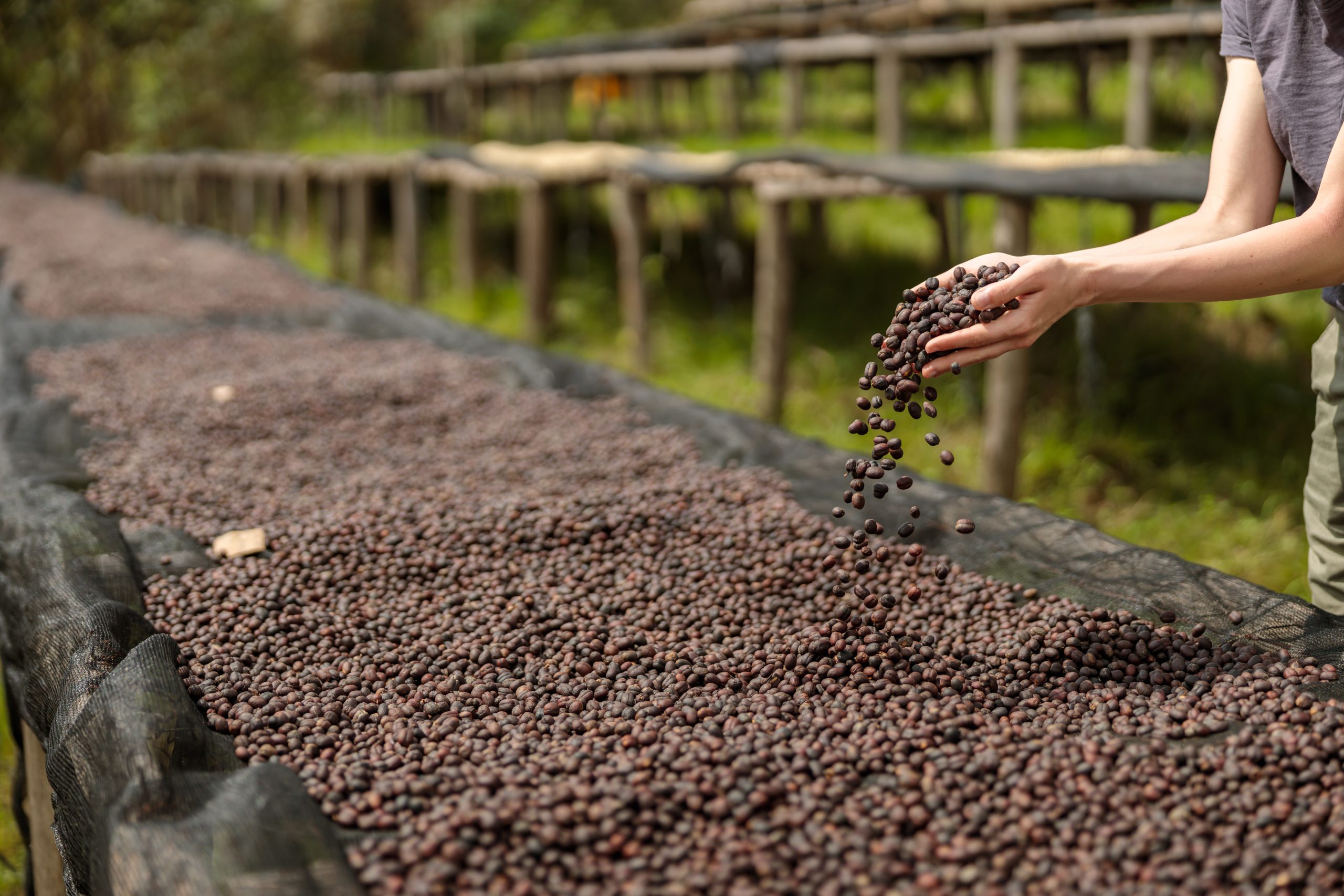
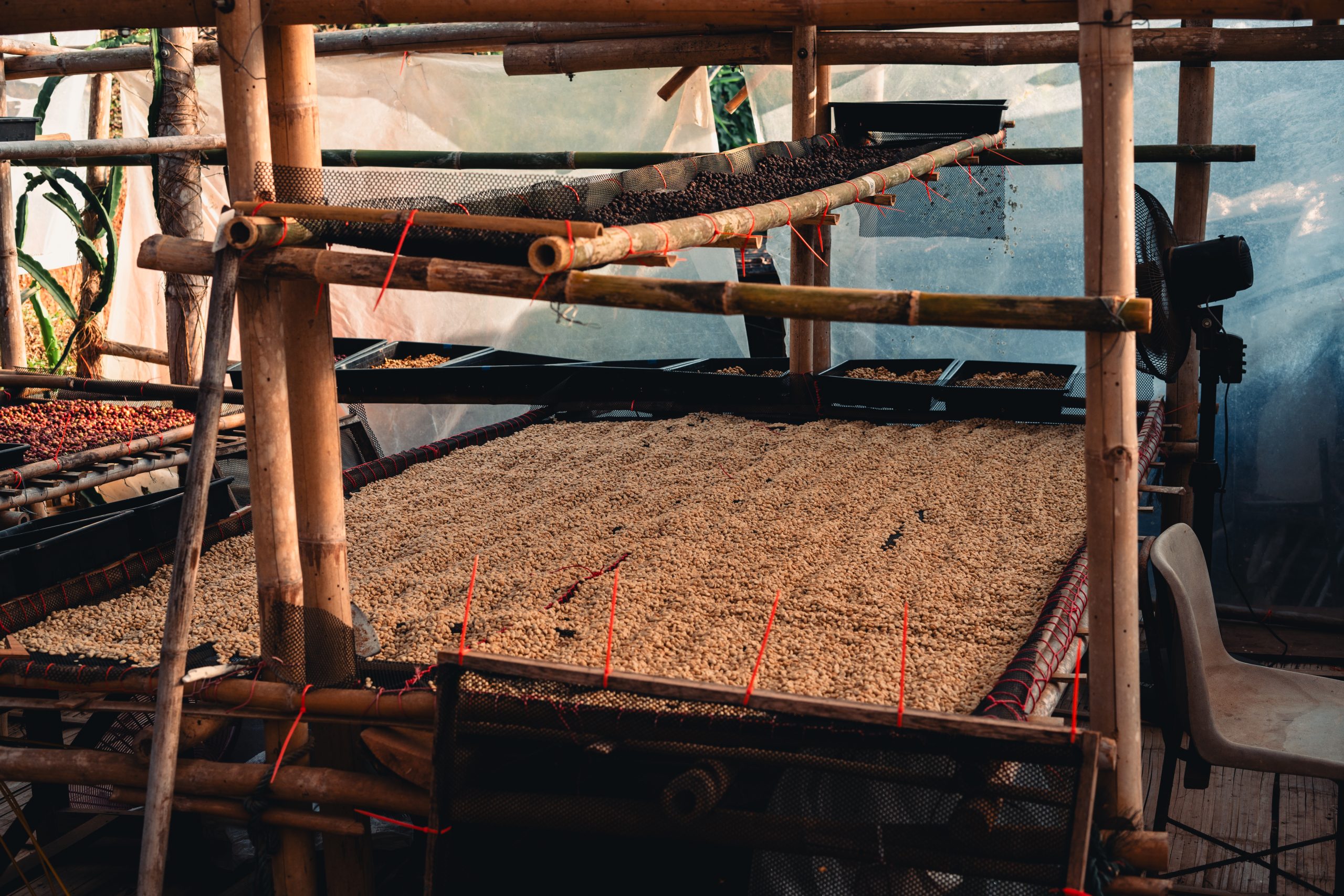
Coffee is usually washed or honey processed at our partner mills. Fermentation breaks down mucilage and readies the parchment for drying. Time and temperature are closely watched: enough activity to clean the seed and nudge fruit complexity, never so much that it tips toward funk. We dry on raised beds under shade nets, turning often, aiming for even moisture and an elegant finish in the cup.
Cacao fermentation is more dramatic. Pulp and seeds go into wooden boxes for six or seven days, turned each day to aerate. Heat climbs to 45–50°C. Natural yeasts and bacteria transform sugars and acids, building the building blocks of chocolate flavor. Afterward, beans sun-dry to ~7% moisture. Shells crack crisply; nibs taste of fruit and honey long before sugar ever enters the room.
Roasting & Making
Roasting is where we practice restraint. For coffee, we nudge heat so origin has room to speak—tangerine stays bright, cocoa stays clean, and nothing tips into smoke. For chocolate, we roast nibs to clear away raw, green edges, then refine and conch until the texture simply disappears on the tongue. Our bars are short-ingredient on purpose: cacao, sugar, sometimes a pinch of cocoa butter. Simpler recipes make it impossible to hide; they also make it easier to taste the farm. Our goal isn’t a signature roast—it’s a signature clarity.
Brewing & Tasting
We keep the chain short and the paperwork visible: lots, processing style, harvest dates, premiums. Direct trade is slower than buying from a screen, but it makes room for feedback. We can ask for raised-bed drying, longer fermentation, or a different screen size; farmers can ask for earlier payments or a second visit when the weather turns. That steady back-and-forth is how both sides get better. If you ever wonder why your cup tastes a little brighter this year, there’s probably a note in a field book that explains it.
What’s On Now (Quick Notes)
- Guatemala (filter): apple, caramel, cocoa.
- Ethiopia (filter/espresso): jasmine, blueberry, bergamot.
- Espresso blend: dark chocolate, berry jam, almond.
- Tanzania 70% (bar): raspberry, molasses.
- Uganda 75% (bar): brownie, dried fig.
Enjoy It at Home!
Two small habits carry most of the result. First, grind fresh and start at 1:16 for filter—then adjust one thing at a time: two grams of water, a click finer, a touch cooler. Second, treat chocolate like wine: store cool and dry, snap a small piece, and let it melt. If you want to explore pairings, taste the chocolate first and the coffee second; acidity rises, sweetness sharpens, and the finish tends to stretch. The moment you catch that lift, you’ll understand why we put these two crafts under one roof.
Every cup and bar is a chain of care—picker, mill, roaster, maker, and you. When each link holds, flavor feels inevitable. Our promise is to keep the chain short, the prices fair, and the details public, so you can taste not just a product but a relationship. From hillside to mug, from pod to bar—thanks for walking the path with us.